The holiday season brings families together in ways everyday life rarely does. Children return home, grandkids fill familiar rooms, and long-held traditions unfold. Within these warm reunions, though, many families experience a subtle moment of realization—an unexpected glimpse of change. A parent hesitates before standing. An aging loved one repeats a story several times. A spouse quietly compensates, answering for their partner or steadying an arm during a simple walk to the kitchen. The home that once felt perfectly safe suddenly feels different.
Many husbands and wives shoulder these changes long before anyone else notices. Spouses often hide the physical and emotional toll, insisting they can manage on their own. Families stay quiet at first, not out of neglect but out of love. Adult children want to believe their parents are managing. Spouses want to protect their partner’s dignity. Everyone wants home to remain a sanctuary. But there comes a point when love may not be enough—when the risks grow larger than anyone wants to admit. Waiting, even with the best intentions, often introduces challenges we don’t immediately recognize.
One of the most common assumptions is that older adults are safest in their own home. Yet research from the CDC shows that one in four adults over 65 will experience a fall this year, and 60% of those falls occur in the home, typically when no one is around.¹ Seniors often hide their daily challenges; AARP reports that older adults frequently downplay mobility issues, memory changes, and difficulty with daily tasks to avoid losing independence or becoming a burden.²
What families also discover during the holidays is something quieter, but just as dangerous: the loneliness of living at home without consistent social engagement. Even seniors surrounded by familiar walls can go days with little conversation, no shared meals, and no sense of connection. At home, routines shrink. Television replaces conversation. Dusty hobbies stay untouched. Without engagement, entertainment, or meaningful interaction, it’s easy for older adults to slowly lose sight of life itself—its joy, its rhythm, and its purpose. Human beings are wired for community. Social connection isn’t optional; it sustains health in ways we often underestimate.
Many older adults come from a generation that prided itself on resilience and self-reliance. They lived through harder times, built careers, raised families, and spent decades putting others first. Admitting they need help doesn’t come naturally. They mask symptoms, minimize pain, and say “I’m fine” even when caregiving has become exhausting or unsafe—because that’s how they’ve lived their entire lives.
There is also a family dynamic that rarely gets discussed. Some relatives notice the changes immediately, while others avoid acknowledging them—not out of indifference, but out of fear of what accepting decline really means. Holidays magnify these differences. One sibling voices concern. Another insists, “She’s fine.” A spouse may insist they can continue providing all the care, even when it is draining, isolating, or risky. These emotional cross-currents are common, but they often delay decisions—and delaying rarely improves safety.
In trying to respect independence, many families choose independent living communities first. But independent living provides very limited support and is not required to offer 24-hour staffing. There is often no oversight of medication management, which can become dangerous when doses are missed, mixed up, or doubled. Nutrition can also decline. Many independent living settings offer only a small kitchenette, leaving older adults to rely on microwaved meals, snacks, or inconsistent eating patterns that don’t support their health. Families and spouses often hire private caregivers to fill these gaps, and both cost and stress increase. National senior housing studies consistently show that stronger staffing ratios lead to better outcomes, fewer hospitalizations, and safer environments.³ What begins as a gentle transition sometimes becomes the least effective and most expensive option for someone who needs more consistent care—especially when one spouse is relying on the other for daily support.
And when support is needed, home environments often lack access to the kinds of services that quietly keep older adults safe and thriving. Families rarely think about physical therapy until a loved one begins shuffling or avoiding certain movements. They don’t think about occupational therapy until simple daily tasks—buttoning a shirt, preparing a meal, stepping into the shower—become slower or riskier. Speech therapy usually becomes relevant only when words disappear, swallowing changes, or memory grows inconsistent. And nurse oversight becomes essential long before a crisis; small health shifts, medication changes, or signs of infection are easy to miss when someone is living at home.
These are the layers of support that simply don’t exist in most home settings, even with the best intentions. Without them, small issues quietly compound. A tightening joint becomes a fall. A forgotten pill becomes a hospitalization. A subtle communication change becomes a frightening moment of confusion. Families don’t overlook these services because they don’t care—they simply don’t realize how essential they are until something goes wrong.
For individuals with memory loss or cognitive change, the environment matters even more. Large institutional buildings can heighten confusion, anxiety, and isolation. Alzheimer’s Association research shows that small-home environments lead to reduced stress, fewer behavioral issues, and greater day-to-day stability.⁴ These findings have led many families—and especially caregiving spouses—to seek settings that feel more intimate and personal, rather than clinical or overwhelming.
For families in Tallahassee, one local community has been quietly reshaping what assisted living can feel like.
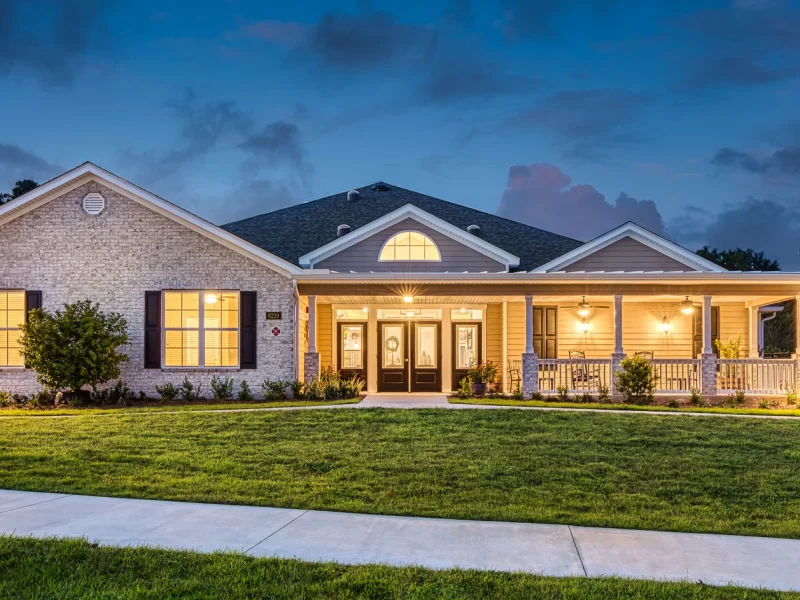
The Villas at Killearn Lakes isn’t a traditional assisted living facility. It’s a neighborhood of real homes—familiar, warm, and intentionally designed so that life can truly happen inside them. Only 12 elders live in each villa, supported by one of the region’s strongest staffing ratios. Families often expect a facility tour, but what they experience instead feels like home.
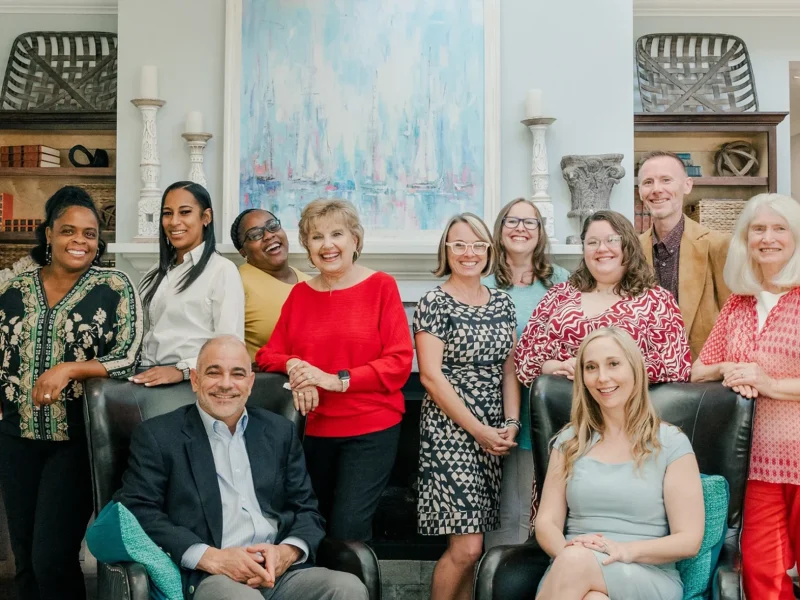
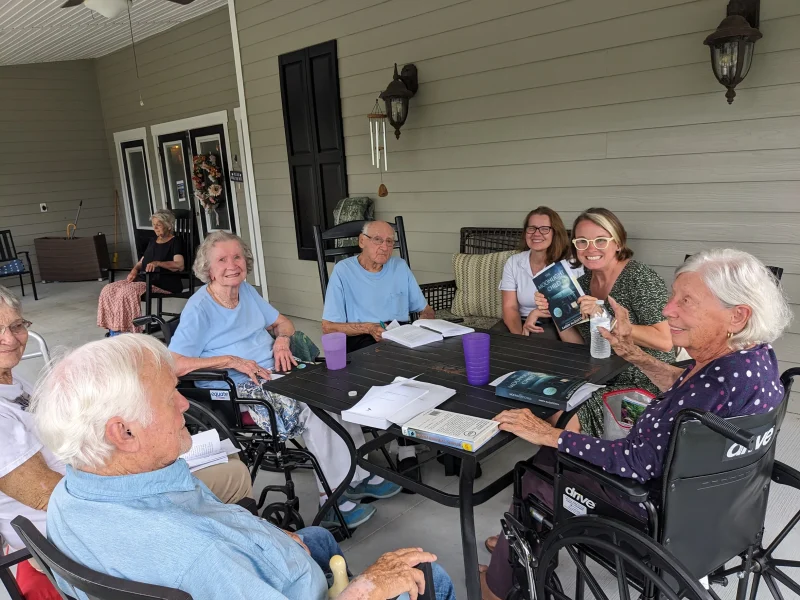
There are no long hallways and no institutional atmosphere—just comfortable living rooms, home-cooked meals, daily rhythms, music, laughter, entertainment, and genuine connection. Social engagement isn’t something scheduled—it happens naturally, constantly, and authentically. And clinical support is not an afterthought. Therapists, nurses, and high-touch caregivers collaborate to surround each elder with personalized, attentive care, ensuring mobility improves, safety is protected, and dignity is preserved.
Many spouses say they feel a profound sense of relief knowing their loved one is cared for not only in a place that looks like a home, but is a home.
Managing Member Pete Rizzo describes it this way:
“In most care settings, support is treated like a task—a checklist or a service model. At the Villas, we built something very different. We built a culture. A culture where care is woven into every moment of daily life, where relationships feel like family, and where elders are embraced, valued, and connected to a life that still has meaning.”
If this holiday season raised quiet concerns or subtle realizations about an aging loved one—or a spouse doing more than they can safely manage—those moments matter. They may be the earliest and most honest indicators that help is needed. Your loved one may not need a traditional facility—but they may need a home that can truly care for them, protect their safety, and honor their dignity.
The Villas at Killearn Lakes was created for families and spouses standing at this exact point—where love meets reality and safety becomes the greatest gift you can give.
If your family is approaching that threshold, the Villas at Killearn Lakes should be one of the first places you visit.
Sources