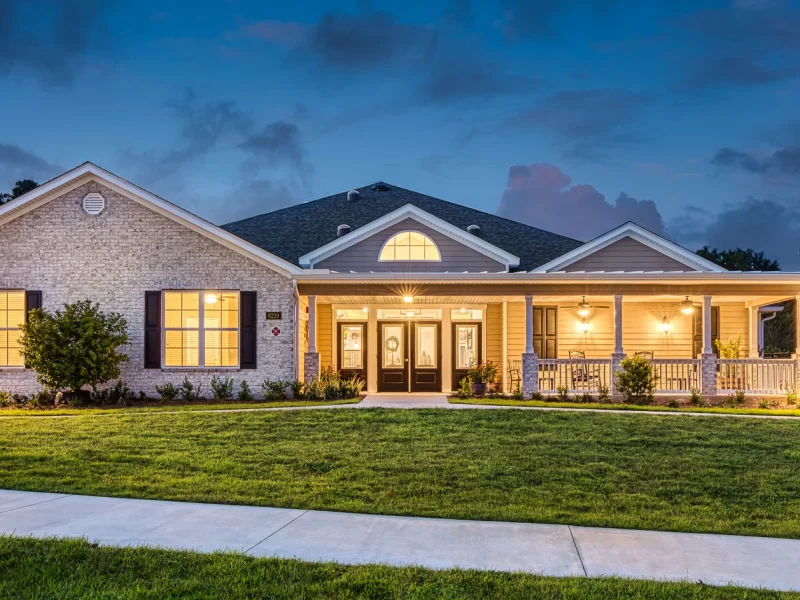
Six Homes. Just 12 Elders in Each. Front Porches, open Kitchens, and walkable paths where carepartners and elders live life together, not down long institutional hallways.
Why a Home Setting Makes a Difference
When families walk into Villas at Killearn Lakes, they notice something immediately.
It feels like a home.
It looks like a home.
It sounds like a home.
And yes — it even smells like a home.
There are no long corridors.
No crowded dining halls.
No institutional atmosphere.
Instead, there are six real homes, each with just twelve Elders, connected by walking paths and front porches.
That scale changes daily life in meaningful ways.
Smaller homes mean:
Relationships that are consistent, not rotating
Shorter distances to navigate
A more predictable daily rhythm
Care partners who remain close and attentive.
We know that environment shapes daily mood, safety, and connection.
Designed for Safer, Simpler Living and Care That Stays Close
Every villa at Villas at Killearn Lakes was intentionally designed to make daily life easier to navigate, while keeping care naturally close.
There are no long hallways to manage.
No step-ups or step-downs anywhere on campus.
Common areas are open and visible, so Elders can move comfortably without feeling confined.
Bathrooms feature level-entry showers that support stability and independence, without looking clinical.
Meals are prepared and enjoyed within each home’s kitchen, allowing Elders to eat at a natural pace instead of following rigid central dining schedule.
Why This Matters
Small environmental details make a meaningful difference.
Easier navigation reduces frustration.
Level transitions reduce fall risk.
Open sightlines allow faster response.
Smaller shared spaces support closer, more connected care.
Design should never feel like a system.
It should quietly support dignity, safety, and connection every day.
Inside each Villa
Life inside each villa unfolds at a steady, familiar pace.
The heart of the home is an open great room and kitchen, where meals are prepared and care partners remain part of everyday life rather than positioned apart from it.
A separate family room provides a quieter place to rest, visit, or reset when the day calls for less stimulation.
Private bedrooms sit just steps from the heart of the home, giving residents the choice to join the household or retreat to their own space, without long walks or confusion.
Because the setting is intimate, relationships become consistent. Elders see the same faces. Conversations continue from one day to the next. Support is always present, without ever feeling institutional.
What This Changes
Elders can be part of the household or step away when they choose
Support stays close without feeling intrusive
The day feels recognizable, not chaotic
Connection happens within relationship, not from a distance
Kitchen & Dining
Each villa includes an open kitchen and dining area at the center of the home.
Meals are prepared and served right where residents live. The dining experience moves at each resident’s pace, rather than a fixed schedule.
Elders are not rushed to gather at a set time. Mealtime feels calm, familiar, and personal.
Menus are shaped by resident preferences and reviewed by a dietitian to ensure balanced nutrition.
Families often say the same thing when they walk in:
Each resident has a private bedroom and bathroom — a space that is truly their own within the home.
Families personalize rooms with familiar furniture, photographs, and meaningful belongings, helping preserve continuity during transition.
Private bedrooms sit just steps from the shared living spaces, allowing residents to be part of the household while still having a quiet place to retreat.
Bathrooms are thoughtfully designed with level-entry showers and open layouts that support safety without looking clinical. There are no step-ups or sudden transitions anywhere in the home, reducing risk while maintaining dignity.
Rooms include individual temperature control, allowing residents to remain comfortable throughout the day.
What This Changes
Privacy supports dignity
Familiar surroundings ease anxiety
Bathrooms prioritize safety without feeling medical
Care remains close when needed
Personal space should feel comforting and secure , never institutional.
Outdoor Paths & Porches
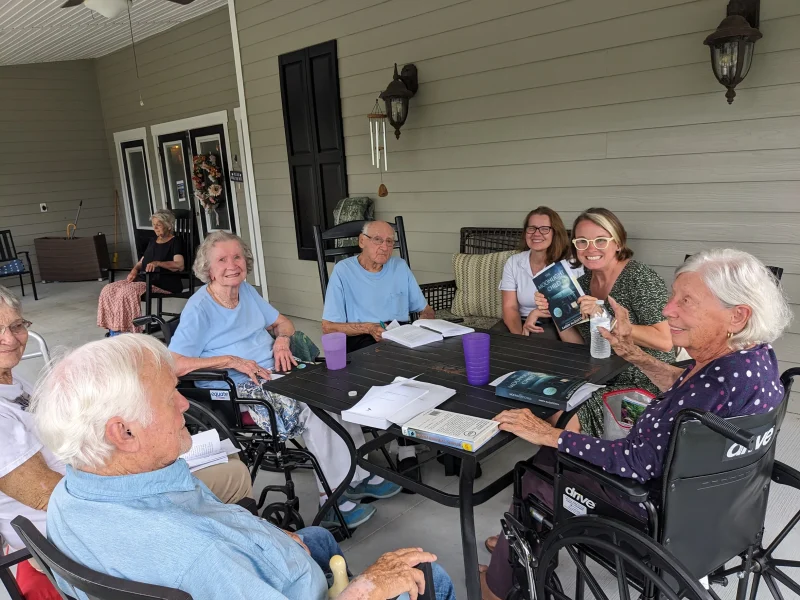
Front and back porches are some of the most enjoyed spaces in the neighborhood.
Elders gather there throughout the day — sitting, talking, watching the world go by. Families, too, find themselves lingering there, creating visits that feel relaxed and natural rather than structured or rushed.
Short, connected walking paths link each villa, making it easy to step outside and move comfortably throughout the neighborhood.
At the center, a pergola and water feature provide a welcoming place to sit and visit — a familiar landmark for elders and a comfortable gathering space for families.
Time outdoors isn’t reserved for special occasions. It’s part of daily life.
Fresh air, gentle movement, and natural light support steadier moods and a greater sense of calm.
What This Changes
Visits feel more like sitting on a porch than checking into a facility
Elders experience freedom within a familiar setting
Movement reduces restlessness
Connection extends beyond the front door New pics 3 good
See It in Person
Photos can only show so much. Seeing the homes, walking the paths, and sitting on the porches often helps families decide if this is the right setting for their loved one.